
"Digital Business Transformation" Module as part of the TEAM University / Kozminski University Executive MBA
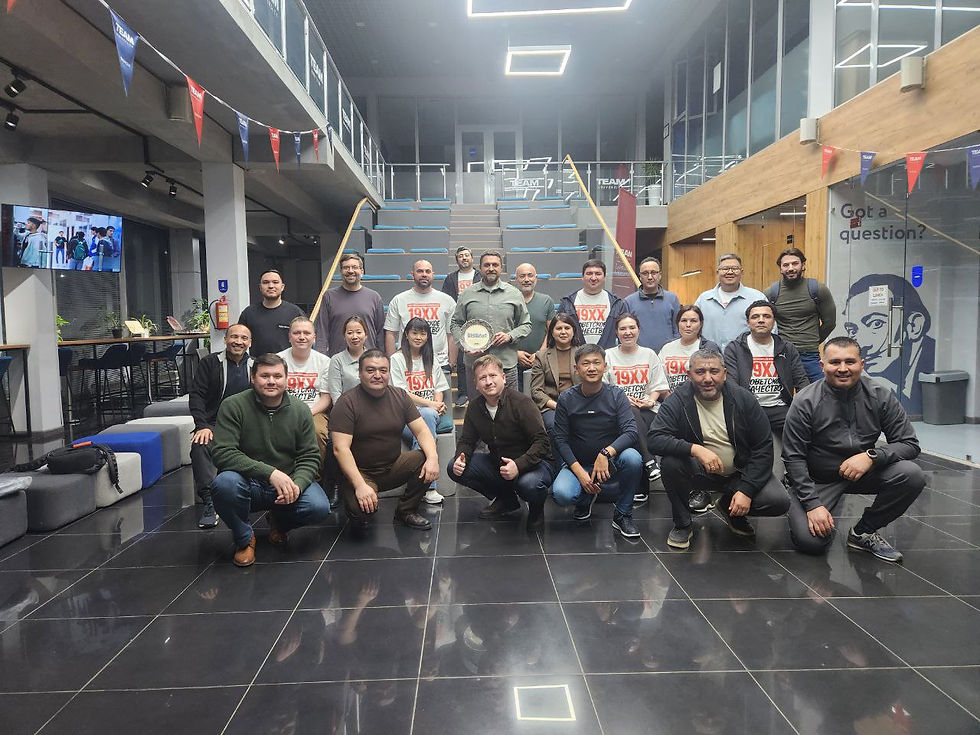
From December 2025 to January 2026, I had the pleasure of delivering the "Digital Business Transformation" module as part of the Executive MBA program, a joint initiative by TEAM University and Kozminski University (Warsaw).
The 24-hour module was structured around intensive lectures, practical workshops, and concluded with the participants’ final project defenses. I am deeply grateful to the program team, the organizers, and the students for the invitation, their trust, and a truly meaningful collaboration. Based on both the atmosphere in the room and the feedback received, I believe we built a powerful course — one defined by lively discussions, real-world case studies, and a high level of student engagement.
It was vital for me that our conversation on digital transformation and development went beyond mere technology and IT tools. We explored a much broader context: the evolution of society, shifting management models, and the profound impact of digital innovation on business, culture, and everyday life.
A dedicated segment of the module was focused on what I call the "philosophy of digital": the principle that digital technologies demand honesty, transparency, and accountability. If data and processes do not reflect reality, a digital system quickly turns into a hollow shell and ceases to function.
Therefore, we approached digital transformation not as the mere implementation of tools, but as a fundamental shift in management models, human capital logic, and organizational culture. Our priority was: people, accountability, processes, transparency, and a readiness to work with data. Only after establishing these foundations did we move on to selecting specific digital solutions, platforms, marketing tools, and knowledge management systems. Within the module, we examined the distinctions between automation, digitalization, and digital transformation itself, and discussed the development of digital ecosystems, business process architecture, the roles of the CEO and CDTO in change management, digital culture, and the management of knowledge and organizational information, as well as the principles of selecting digital solutions and their integration into business operations.
We paid special attention to the synergy between corporate strategy, data, marketing, and tech platforms. We examined digital marketing as an integral part of the overall business ecosystem and discussed the boundaries of various transformation approaches based on an organization’s scale, maturity, and specific objectives.
A vital component of the course was the project work. Executive MBA teams analyzed their own companies, mapping out digital ecosystems and key business processes while forming a strategic vision for their digital development. A significant portion of this work was dedicated to a critical analysis of constraints, risks, and the real-world feasibility of implementing change.
The audience was particularly impressive — executives and entrepreneurs with profound practical experience. They were ready for an open professional dialogue, viewing digital transformation not as a buzzword, but as a complex management process inextricably linked to strategy, responsibility, and long-term business growth.